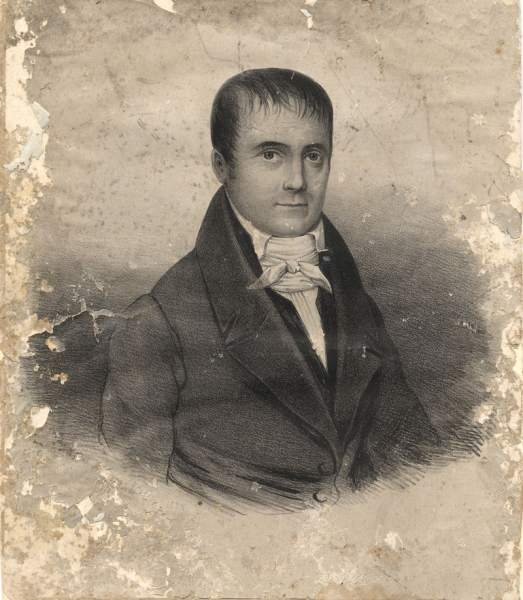
JULES LION
In 1839 the image-making process known as the daguerreotype, pioneered by Louis Jacques Mande’ Daguerre, emerged in France. The process used a combination of chemical vapors to render a photographic plate light-sensitive and created a unique, one of a kind image that can’t be reproduced. Jules Lion, a well-established African American lithographer already working in New Orleans at the time, returned to his home country of France to learn more about this new form of photography. Upon his return to New Orleans, Lion began taking daguerreotypes of the city and exhibited his images at the St. Charles Museum. This was the first documented photography show in Louisiana and admittance was one dollar, with Lion demonstrating the process for those in attendance during the opening. It’s unfortunate that we don’t have any surviving examples of his photographic work as they are some of the earliest examples of fixed image making in our state and were also created by a free man of color.
I have a real fondness for Jules Lion as he was relatively isolated in his efforts to learn and practice this new photographic process in what was really still regarded as a “frontier town”. Daguerre had trained people to travel throughout Europe and America teaching his process and selling pricey equipment to interested artists residing in more urbanized cities. However, Lion didn’t really have the access to these more metropolitan areas, nor the money to import all of the necessary equipment and chemistry from abroad after he traveled to France to see the process. So, he made it himself! He built his own versions of the cameras and optics needed, as well as mixed his own chemical baths for the extremely delicate, finicky process. By 1843, with an increase in the professional competition in New Orleans and the development of more expensive photo equipment, he abandoned his photographic pursuits and returned to lithography.
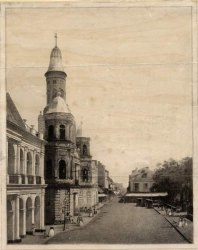
As a historic process photographer I often feel completely isolated in the way I go about making pictures. I measure my chemistry using old scales and syringes, tweaking formulas as I go, documenting results in numerous little journals. I heat gelatin and salts and silver in beakers in my makeshift darkroom, under a red safelight, and generally have a very small community of other practitioners with whom I can observe and learn. This means I similarly must travel elsewhere to learn more about the process I’ve chosen to practice. So it’s funny to feel a significant connection to someone who lived nearly 200 years ago. Maybe one day we’ll uncover some long-lost, tarnished silvered copper plates that will finally show us Lion’s immense success with just doing his own thing. In the meantime check out some of his well-preserved lithographs to satiate your curiosity:
-Cate Colvin Sampson
Citations:
http://www.crt.state.la.us/louisiana-state-museum/collections/visual-art/artists/jules-lion
http://www.knowla.org/entry/481/
Smith, Margaret Denton, and Mary Louise Tucker. Photography in New Orleans: The Early Years, 1840-1865. Baton Rouge: Louisiana State UP, 1982. Print.
 neworleanslouisianaphotographydotcom
Leave a comment